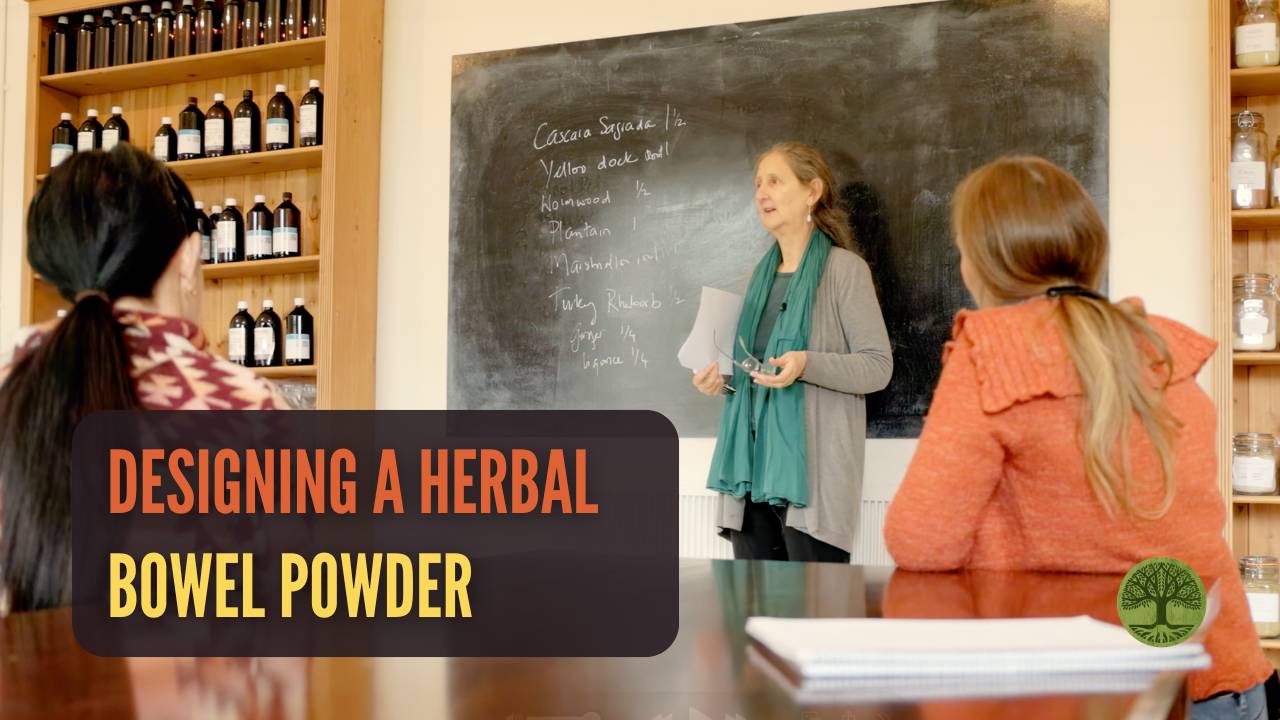
The Subtle Art of Designing a Bowel Formula?
By Helen Begadon
Director, Core College
Many people’s experience of herbal medicine is of buying a tea or a remedy in a health food shop, namely a single herb or a combination of no more than three to four herbs. I want to explain that traditional herbalism always used longer formulas because this allows for the possibility of balancing the effects of the ingredients to achieve a desired action on the body, while limiting the natural, though sometimes difficult, side effects of using single herbs.
Using a combination of herbs has a much better outcome because the herbs work in a synergistic way, balancing each other and augmenting or ameliorating each other’s effects.
Colon cleansing is the bedrock of natural healing and detox. As Dr John Ray Christopher, renowned American herbalist and educator, said, we need to cleanse and nourish in all natural healing protocols, and nowhere is cleansing more important than when dealing with the colon.
In the context of colon cleansing, healing and rebuilding, the challenge of creating the right combination is paramount. The fundamental herbs in any bowel formula are known as cathartics or laxatives, in that they work on the bowel wall to cause peristalsis and movement, especially where hardened, old faecal matter is present, which unfortunately is usually the case with most of us. Other herbs in the formula can work to support the liver’s production of bile, which in turn supports bowel movements. Because bile production can cause flatulence, some of the herbs in the formula are included in order to calm the flatulence. This classification of herbs is known as carminatives, and includes such household names as Ginger and Fennel.
In turn, some herbs, like Marshmallow root (Althaea officinalis), known as vulneraries, work to heal the tissue and act as softening and demulcent agents.
This is all, of course, influenced by the particular health of the patient being treated. Iridology gives great insight into the condition of the colon, pointing clearly to whether the issues are stress-related, caused primarily by dietary choices, or have other causes. Therefore, no two formulas for patients are identical. The true art of herbalism is choosing the herbs in the formula, the parts used of each herb, and the volume of each part.
This small example serves to demonstrate the principles of formula making in herbal medicine and applies no matter what the remedy is, and whether it is in powder, tincture, infusion or decocted herb form. In future emails, we will delve into the different kinds of herbal preparations which are used depending on the plant material, whether it is root, bark, leaf, flower or berry.
This video is for educational purposes only and does not constitute medical advice; always consult a qualified healthcare professional before making changes to your health routine, especially if you are taking medication.
Discover our diverse range of courses tailored to suit your interests in natural medicine. Whether you're keen on mastering herbal medicine, passionate about plant-based nutrition as a Living Food Instructor, intrigued by the power of Reflexology, or aspiring to become a certified Nutritionist and Iridologist, we have a course to fuel your educational journey.
Stay connected with news and updates!
Join our mailing list to receive the latest news and updates from our team. Receive valuable insights, tips, and exclusive updates on all our upcoming courses and events.
Don't worry, your information will not be shared.
We hate SPAM. We will never sell your information, for any reason.