Making Raw Garlic Delicious
Garlic sits beautifully between food and medicine. For centuries, people have valued it not only for its flavour but also for its traditional use in supporting circulation, digestion and general wellbeing. Yet raw garlic can be intensely pungent, so the challenge is finding enjoyable ways to include it regularly in the diet.
In this short demonstration, we explore three simple ways of making raw garlic easier, and considerably more delicious to eat.
Pickled Garlic
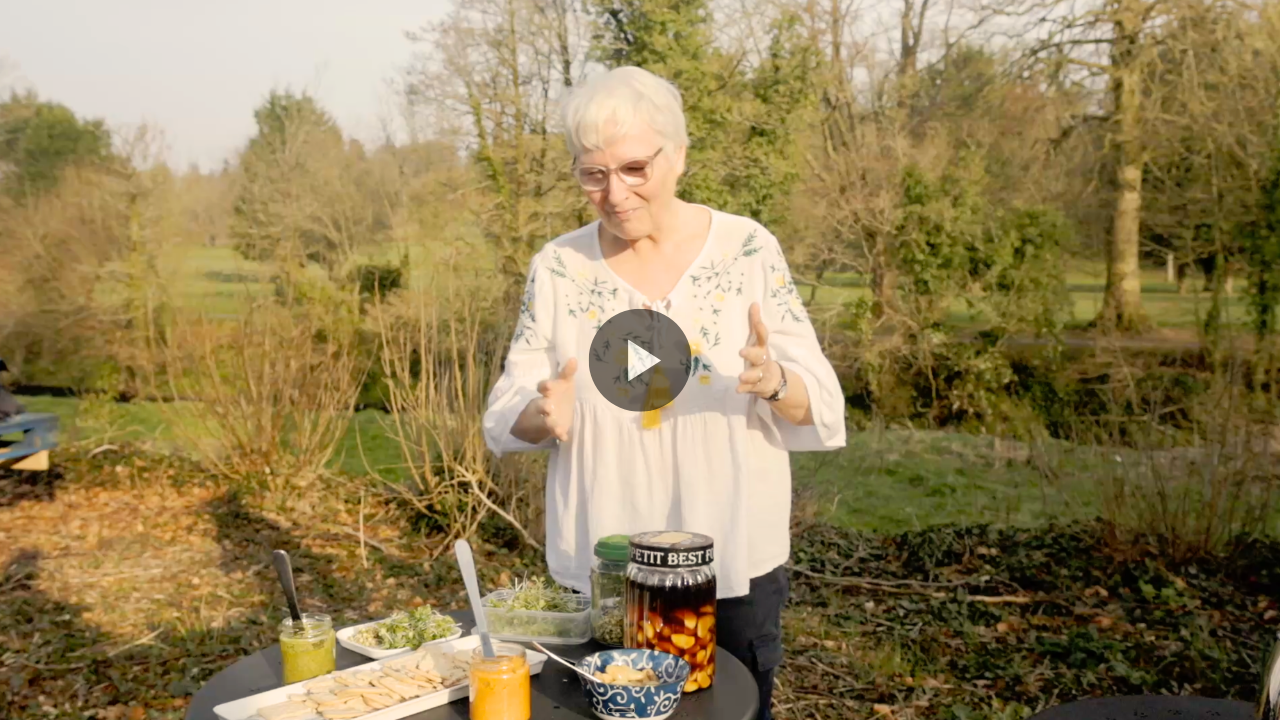
The first preparation is garlic that has been steeped for a month in apple cider vinegar and tamari. Pickling softens the cloves and mellows their sharpness without cooking them. Once strained, the garlic can be eaten as it is or sweetened slightly with maple syrup.
This creates a wonderfully balanced combination of sour, salty, sweet and pungent flavours. It is also an accessible introduction for anyone who finds fresh raw garlic overpowering. The jar should be kept refrigerated and handled with clean utensils.
Why Use Garlic Raw?
Raw garlic is naturally enzyme-rich. Enzymes facilitate many of the chemical reactions involved in digestion, metabolism, energy production and the body’s normal functioning. When garlic is cut, crushed or chewed, the enzyme alliinase acts upon a naturally occurring compound called alliin to produce allicin, the substance largely responsible for the familiar aroma of freshly crushed garlic and many of its studied biological effects. Heat can reduce alliinase activity, although the precise compounds present will vary according to how the garlic is prepared and stored.¹
In herbal medicine, garlic is regarded as both a valuable medicinal food and a powerful herb. It is traditionally valued for its antimicrobial and antifungal properties, its ability to help cleanse the blood and its usefulness in upper respiratory conditions.² Fresh garlic can be scattered through salads, added to healthy sandwiches or blended into dressings. Combining it with lemon juice, herbs, tahini, avocado or soaked nuts can soften its intensity while retaining its fresh, lively character.
Mojo Rojo and Mojo Verde
Two colourful raw garlic sauces offer another enjoyable way to use fresh garlic. Mojo Rojo combines a whole bulb of garlic with red pepper and chilli, while Mojo Verde blends garlic with fresh coriander. Soaked cashew nuts and cumin help to create rich, creamy spreads in which the garlic remains prominent without overwhelming the other flavours.
These sauces can be served on crackers and topped with mung bean sprouts or microgreens. The freshness of the sprouts and greens balances the richness of the sauces while adding texture, colour and valuable nutrients.
The world-renowned herbalist, John R. Christopher, really loved this herb.
“And for us, no salad dressing is complete without garlic. Use a little or as much as you like, to taste.”³
— John R. Christopher, School of Natural Healing, Chapter 16, “The Regenerative Diet”, p. 554.
What About Garlic Breath?
People sometimes notice strong breath when they first begin eating raw garlic regularly. The smell does not come solely from garlic remaining in the mouth. Volatile sulphur compounds, particularly allyl methyl sulphide, are absorbed into the bloodstream and later released through the lungs.⁴
Some regular garlic eaters report that the odour becomes less noticeable after several days. Within natural-health traditions, this is sometimes interpreted as part of the body’s cleansing or detoxifying response.
Garlic reminds us that medicinal foods do not have to be swallowed reluctantly. Thoughtful preparation can transform this powerful, pungent bulb into something that people genuinely enjoy eating.
Sources
Borlinghaus et al., “Allicin: Chemistry and Biological Properties”, Molecules, 2014. Read the source.
School of Natural Healing, “Garlic, Allium sativum”, 100 Herb Syllabus, Herb 34.
Christopher, John R., School of Natural Healing, Chapter 16, “The Regenerative Diet”, p. 554. Christopher Publications, electronic edition.
Tiganescu et al., “A Whiff of Sulfur: One Wind a Day Keeps the Doctor Away”, Antioxidants, 2022. Read the source.
Written by Helen Begadon, Master Herbalist and Director of Core College.
This video is for educational purposes only and does not constitute medical advice; always consult a qualified healthcare professional before making changes to your health routine, especially if you are taking medication.
Related Herbal Stories